


The Nervous System and Its Role in ME/CFS
The Nervous System and Its Role in ME/CFS. Many people living with ME/CFS (Myalgic Encephalomyelitis/Chronic Fatigue Syndrome) describe it as if their body is stuck in a constant fight-or-flight mode.
The Nervous System and Its Role in ME/CFS. Many people living with ME/CFS (Myalgic Encephalomyelitis/Chronic Fatigue Syndrome) describe it as if their body is stuck in a constant fight-or-flight mode.

Blood sugar is basically your body’s way of saying how much fuel is available right now. Too high? You’ll feel tired, sluggish, and inflamed. Too low? You crash—physically and mentally.

Chronic fatigue, brain fog, and low energy. For those living with ME/CFS, it can feel like your body is constantly running on backup power.

Serotonin is a neurotransmitter – a chemical that allows nerve cells in the brain to communicate with each other. But it’s not just found in the brain.

If you’re living with ME/CFS (Myalgic Encephalomyelitis/Chronic Fatigue Syndrome), you know it’s not just about being “tired.” It’s as if your body has lost its inner engine.

We live in a world where notifications, algorithms, and comparison culture are part of our daily lives. FOMO (Fear of Missing Out) has become a built-in reflex

Here’s your 7-Day Brain Fog Detox – a concrete, actionable plan to help you regain your focus, energy, and mental clarity.

In biohacking, it’s a no-brainer: if you want to optimize your energy, focus, recovery, and mental clarity – you need to understand your neurotransmitters.
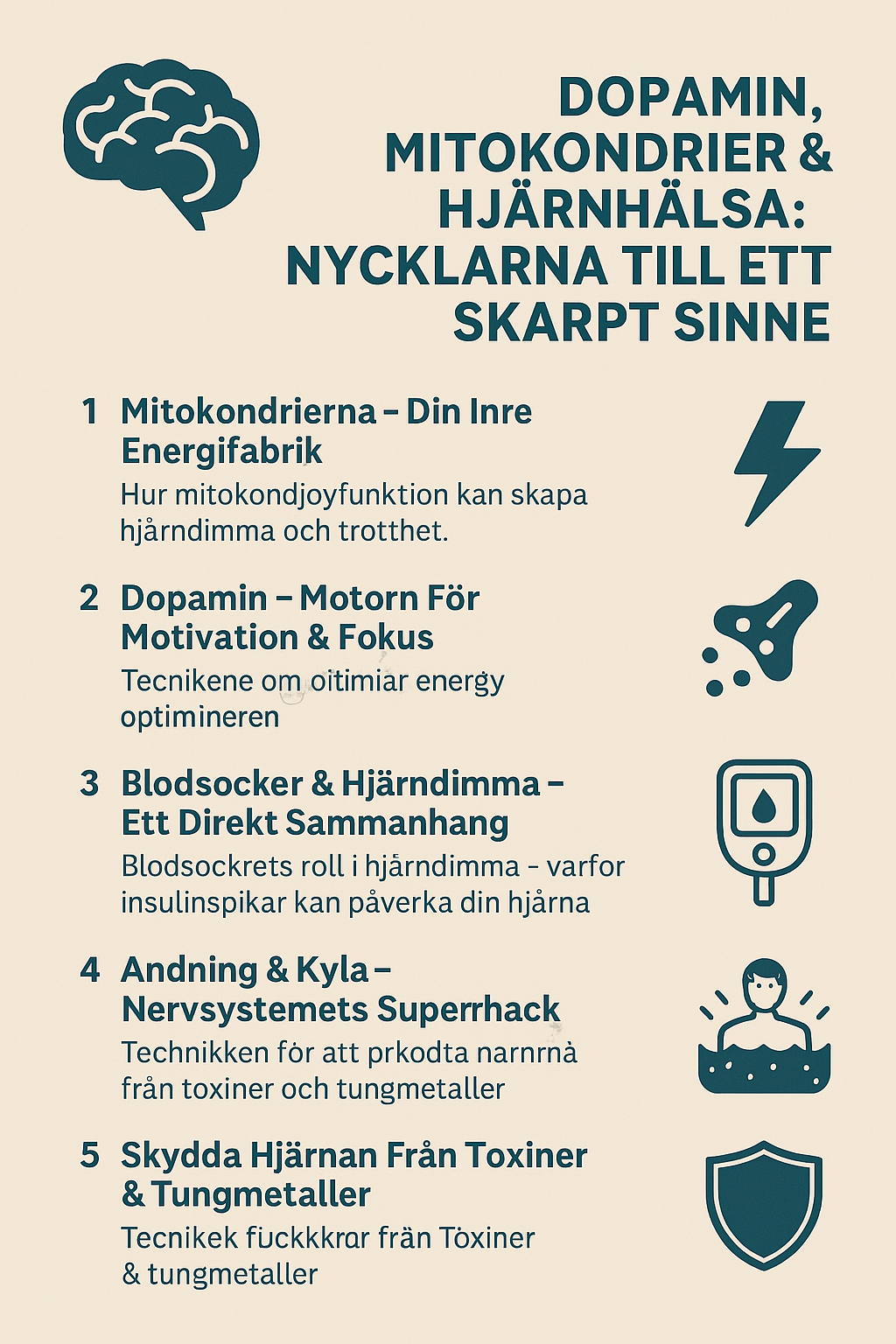
Dopamine, Mitochondria & Brain Health – The Path to a Sharp Mind. Do you often feel mentally tired, unfocused, or foggy-headed?
Magnesium L-Threonate is a special form of magnesium developed by researchers at MIT (Massachusetts Institute of Technology) with one clear goal: to improve magnesium absorption in the brain.